
Comparison
Twin Lobe vs Tri Lobe Roots Blower: Which Profile Fits Your Plant?
By SAE Engineering Dept•October 2, 2026
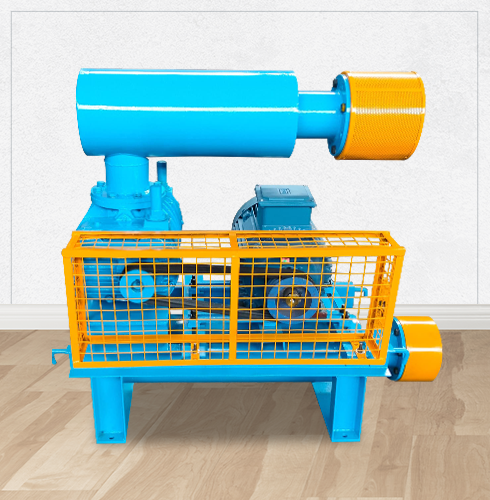
Twin Lobe vs Tri Lobe Roots Blower: Engineering Comparison
Rotary lobe positive displacement blowers are primarily manufactured with two rotor profiles: Twin Lobe (2-Lobe) and Tri Lobe (3-Lobe). Understanding their differences helps select the optimal machine for your plant.
1. Pressure Pulsations & Vibration
- Twin Lobe: Discharges air 4 times per shaft revolution. Generates higher backpressure pulsations and higher mechanical vibration.
- Tri Lobe: Discharges air 6 times per revolution. Reduces discharge pressure pulsations by up to 50%, resulting in minimal piping vibration.
2. Acoustic Noise Levels
Because tri-lobe rotors smooth out airflow pulses, a Tri Lobe Roots Blower operates 3 to 5 dB(A) quieter than a twin-lobe unit of equal capacity.
3. Mechanical Bearing & Gear Life
Lower pressure pulsations mean less shock loading on timing gears and shaft bearings, leading to extended bearing service life in tri-lobe models.
4. Cost & Volumetric Displacement
Twin Lobe Roots Blowers have slightly higher displacement per frame size and lower manufacturing cost, making them ideal for budget-conscious heavy industrial projects.
Comparison Summary Matrix
| Feature | Twin Lobe | Tri Lobe |
|---|---|---|
| Discharge Pulses/Rev | 4 | 6 |
| Noise Level | Standard | Low (-5 dB) |
| Piping Vibration | Moderate | Very Low |
| Capital Cost | Lower | Slightly Higher |
Tags:#Twin Lobe vs Tri Lobe Roots Blower#Two Lobe vs Three Lobe Blower#Low Noise Roots Blower#Blower Pulsation Comparison