
How to Choose a Roots Blower: Engineering Sizing & Selection Guide
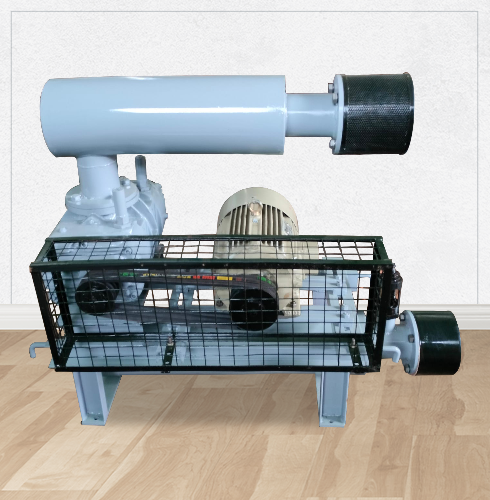
How to Choose a Roots Blower: Complete Sizing & Selection Guide
Selecting the right positive displacement blower is critical to prevent plant downtime, over-spending on electricity, or motor overload. Here is our step-by-step engineering guide on how to choose a Roots blower.
Step 1: Calculate Required Air Flow Rate (m³/hr or CFM)
Determine the actual volume of free air delivery required at suction conditions (FAD). For wastewater aeration, calculate oxygen demand per hour and convert it to total m³/hr airflow taking diffuser efficiency into account.
Step 2: Determine System Differential Pressure (kg/cm² or mbar)
Add total static liquid head (water depth in ETP tank) plus friction losses through piping, bends, valves, and diffusers. This total represents your required operating backpressure.
Step 3: Select Lobe Configuration (Twin Lobe vs Tri Lobe)
- Choose Twin Lobe: If initial capital budget is primary concern and application is heavy rugged industrial duty.
- Choose Tri Lobe: If noise reduction, low vibration, and reduced mechanical stress are required.
Step 4: Select Cooling Method (Air Cooled vs Water Cooled)
- Air Cooled: Suitable for differential pressures up to 0.6 kg/cm² (600 mbar).
- Water Cooled: Required when discharge pressure exceeds 0.6 kg/cm² to prevent thermal rotor expansion.
Step 5: Acoustic & Environment Accessories
If installing near residential zones or inside worker spaces, select an Acoustic Enclosure Hood to maintain sound under 75-80 dB(A).
Need assistance sizing your blower? Request a free sizing sheet from SAE engineers.